Key takeaways
- An airbag deployment signals a significant collision, so review every system it could have affected.
- Restraint system repairs follow the manufacturer's procedures and usually come before ADAS calibration.
- Pre-scans and post-scans document the vehicle's condition, but a clear scan doesn't rule out calibration.
- Complete the repairs and alignment first, then calibrate where the procedure requires it.
Why a deployment calls for a closer look
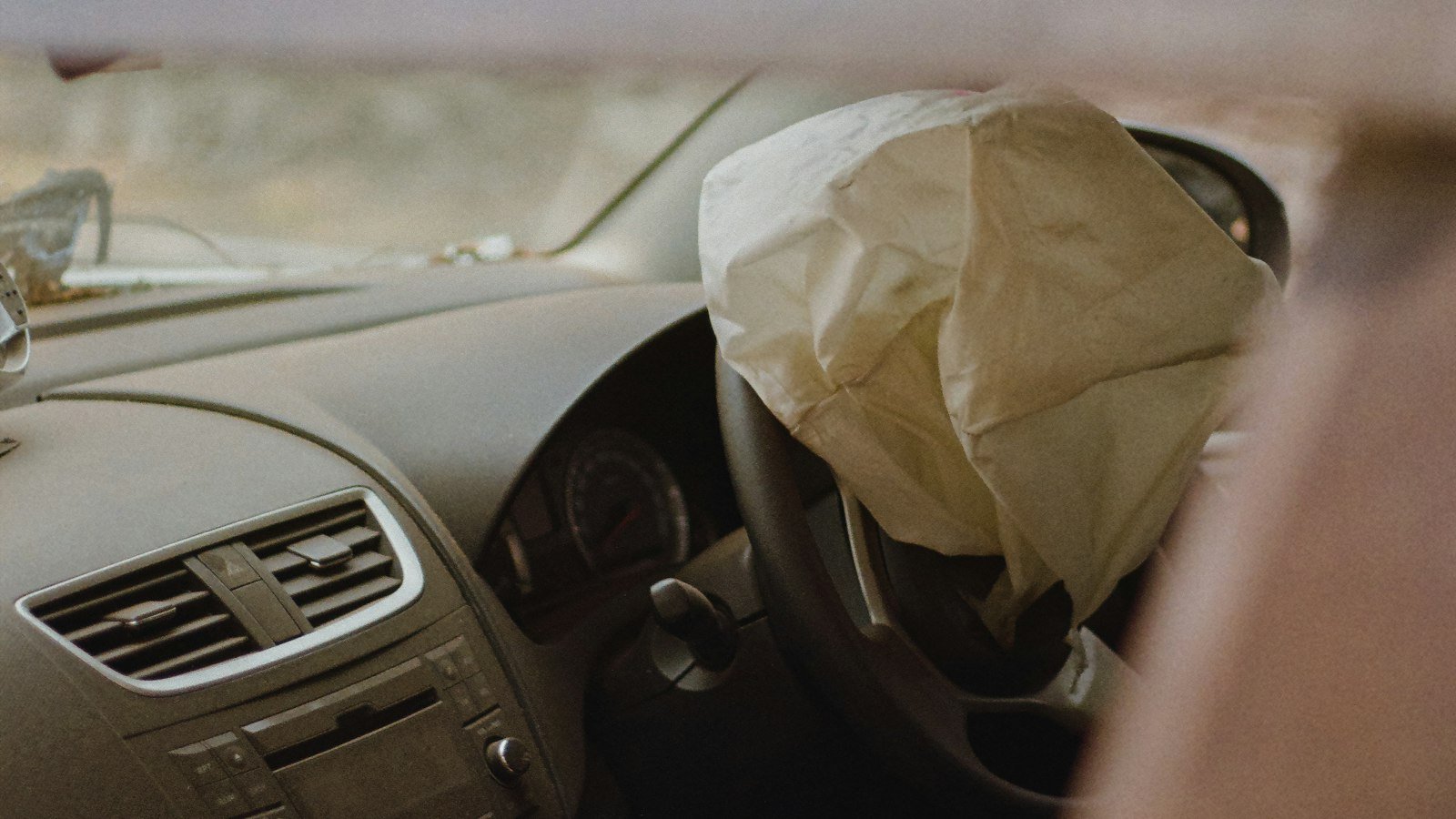
Airbags deploy when the vehicle's restraint system detects a collision that meets its criteria. By the time that happens, the impact has often reached parts where ADAS sensors are mounted: the front bumper and grille, the windshield, the headlamps, the mirrors or the suspension. Some damage is obvious. Some, such as a slightly bent radar bracket or a shifted camera mount, isn't. A deployment doesn't automatically mean a specific calibration is needed, but it's a strong reason to review every system the collision could have affected.
Restraint system repairs come first
Replacing airbags, seat belt pretensioners, crash sensors and related modules is restraint system work, carried out by the repair facility following the manufacturer's procedures. Those procedures can include specific parts, connectors and scan steps. ADAS calibration is a separate stage that usually follows the structural, mechanical and restraint repairs, because a calibration done before the vehicle is fully repaired may need to be repeated.
ADAS systems commonly involved in a front or side collision
- Front radar behind the bumper or grille, used for adaptive cruise and emergency braking
- The forward camera, especially if the windshield cracked or was replaced
- Surround-view cameras in the grille, mirrors or tailgate
- Blind-spot and cross-traffic radar in the bumper corners
- Parking sensors in the bumpers
- Steering angle and alignment, which several systems rely on
The role of pre-scans and post-scans
A pre-scan before repairs records the fault codes stored after the collision, including restraint and ADAS codes, and helps plan the repair. A post-scan after repairs confirms that the systems no longer report faults. Many vehicle manufacturers publish guidance on scanning before and after collision repairs. Clearing codes without addressing their cause doesn't repair anything, and a sensor can be misaimed without setting a code, so the scan is one input alongside the repair procedure.
A typical order of work
- Pre-scan and document the codes and damage
- Complete structural and body repairs
- Complete restraint system repairs per the manufacturer's procedures
- Replace or repair damaged sensors, brackets, glass and bumpers
- Complete the wheel alignment and steering angle reset where specified
- Calibrate the ADAS systems the procedure requires
- Post-scan and record what was done
Why alignment matters after a deployment
A collision strong enough to deploy airbags can also affect suspension and steering components. Cameras and radar are calibrated against the vehicle's direction of travel, so if the alignment is off, a calibration can complete against the wrong reference or fail to complete at all. Manufacturers often list a correct alignment as a prerequisite for ADAS calibration.
Module replacements and calibration
Collision repairs sometimes involve replacing control modules or sensors. Depending on the manufacturer, a new camera, radar or module may need programming, configuration or calibration before it works correctly. The repair information for the specific part and vehicle says what's required. We confirm this when we review the job.
How AdasX fits into the repair
AdasX works on-site with collision repair facilities in Mississauga, Oakville and Burlington. A post-collision ADAS assessment, from $249, reviews the repair and identifies which systems the procedure requires to be calibrated. We schedule the calibration for when the vehicle is ready, so it doesn't need to leave the shop.
What to send when you book
Send the make, model and year, the VIN if available, the estimate or a list of the parts replaced, the pre-scan results if you have them and whether an alignment has been done. Mention whether the windshield was replaced. With those details we can identify the systems involved and plan the visit.
What to expect when you book
- Send the vehicle details: make, model, year, VIN if available, and the repair performed.
- We confirm compatibility, the required procedure, pricing, location and appointment availability.
- We arrange on-site service at your approved business location, with the space and conditions the procedure needs.
- We complete the applicable calibration procedure and provide the service documentation available for that vehicle.
Documentation
We complete the applicable calibration procedure and provide the service documentation available for that vehicle.
Frequently asked questions
Does an airbag deployment mean ADAS calibration is required?
Not automatically. It means the collision was significant, so the cameras, radar, glass and alignment the impact may have affected should be checked. The manufacturer's repair information for the parts and systems involved decides which calibrations are required.
Does AdasX repair airbags?
Restraint system repairs are carried out by the repair facility following the manufacturer's procedures. AdasX provides the ADAS scanning and calibration that follows.
Should calibration be done before or after the alignment?
After, in most cases. Manufacturers often list a correct wheel alignment as a prerequisite for camera and radar calibration.
Why is a pre-scan useful if the vehicle will be scanned after repairs anyway?
The pre-scan records what the collision caused before any work starts, which helps plan the repair and shows the difference between before and after.